


 November 24, 2025
Share


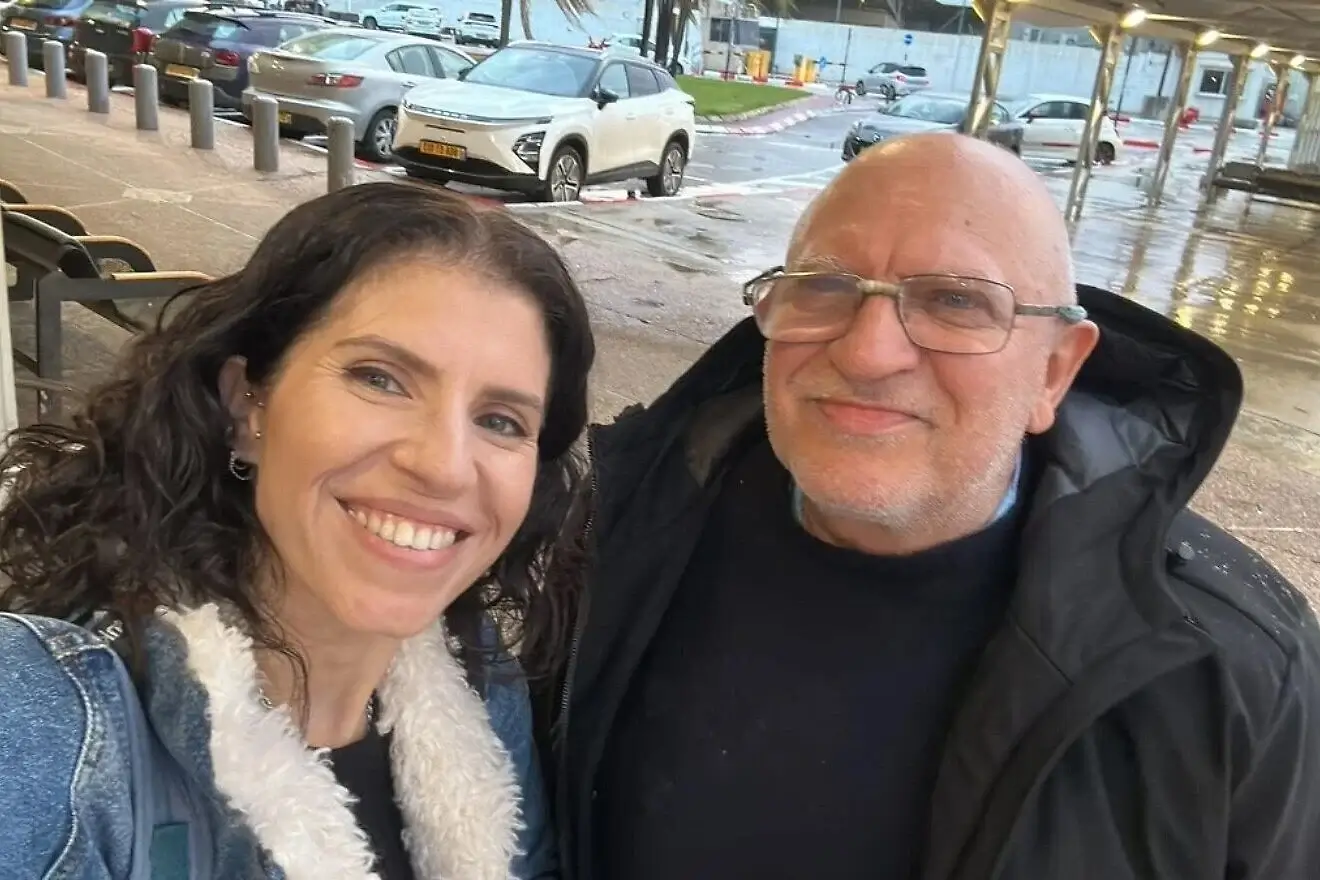
In a world overflowing with curated perfection, every once in a while a story emerges that cuts through the noise—raw, real, and profoundly human. This is the story of Chaya and Shmily Morgenstern, a couple whose journey has carried them through divorce, illness, rejection, miracle, trauma, healing, and the rediscovery of themselves and each other. Their honesty is disarming; their courage contagious.
Their conversation in the Stories of Hope studio was meant to be an interview.
Instead, it became a masterclass on faith, identity, and love.
Chaya grew up in Williamsburg and later Boro Park, living what seemed like a typical Hasidic life—until adolescence brought an unexpected turn. At fourteen, she learned she had Kallmann Syndrome, a rare genetic condition that prevents the body from going through puberty on its own. Her mother, after Googling the combination of “delayed puberty” and “no sense of smell,” discovered what doctors would later confirm: treatment would be possible, but fertility would require medical intervention.
No one prepared Chaya for what this would mean in the world of shidduchim.
The pressure to hide her diagnosis became immense. Potential matches backed out. Shame burrowed deep inside her. She was told not to disclose, and during her first marriage, that secret turned into a painful burden—eventually requiring IVF and adding layers of guilt and isolation.
“I truly believed,” she shared, “that if I left, no one would ever want me.”
Shmily grew up the youngest of eight in Boro Park. Kindhearted, sincere, and musical, he struggled through illness as a teen and never followed the traditional path of long-term yeshiva learning. He worked, davend, had a daily shiur—but in the Hasidic dating world, this made him “less desirable.”
“It’s so frustrating,” he said. “People say they want a learning boy, but most don’t actually mean it.”
He watched friends enter marriages fueled by pressure, appearances, and unrealistic expectations. His own first marriage happened quickly and ended just as quickly. By the time he and Chaya were both divorced, they were carrying different versions of heartbreak.
But heartbreak, it seems, can prepare the soul for honesty.
After moving to Monsey and taking a break from dating, Chaya had one simple goal: reclaim her love of music. She opened Community Connections, searched for a piano teacher, and dialed the first number she saw.
The teacher said:
“What’s your name? Also…I’m a shadchan.”
By the next day, she suggested a match—her cousin, the singer Shmily Morgenstern.
Chaya looked him up online. She saw him singing and felt something she hadn’t felt in a long time: curiosity. Connection. A gut feeling.
But she made herself promise one rule:
No more hiding. She would share her diagnosis early—no matter what.
Shmily almost didn’t go. He was exhausted from endless dates and planned to take a break. But his cousin insisted, and he agreed—mostly to do her a favor.
Then he met Chaya.
“Within five minutes,” he said, “I knew.”
They were real with each other immediately—transparent, grounded, unpolished in the best way.
On the second or third date, Chaya shared her diagnosis.
Shmily didn’t flinch.
“Everyone has something,” he told her.
And for the first time in her life, the shame began to crack.

Seven months after their baby was born, life was full. Busy. Hopeful.
Then one motzoei Shabbos, while driving back from a gig, Shmily’s car suddenly shut down on I-78. He pulled onto the shoulder. Only his back lights worked. While waiting for help, a tractor-trailer slammed into his car, sending him flying 50 feet into the grass, over a fence.
He was found barely alive.
Unrecognizable.
With almost no blood left in his body.
Doctors called him a walking miracle.
He spent months in a coma, surgeries, rehab, and learning to speak again.
Chaya—alone with two children, barely moved into a new home—went into survival mode.
Later, she would say:
“I kept thinking: Hashem prepared me for this. All my years of doing things alone…they were training.”
The accident left Shmily with a traumatic brain injury (TBI) affecting his frontal lobe—the brain’s filter.
Suddenly, he became unfiltered, impulsive, loud in public, deeply sensitive to noise, and at times emotionally dysregulated.
It reshaped their marriage.
For many couples, such a shift becomes the breaking point. Statistically, divorce rates after TBI are high.
But Chaya and Shmily chose something remarkable:
They separated the injury from the person.
“I learned,” Chaya said, “that two feelings can coexist—frustration and gratitude. I can be overwhelmed and still thank Hashem he’s here.”
When his reactions were sharp or unexpected, she reminded herself:
“This is not my husband. This is his brain injury.”
They relied on therapy—individual and couples.
They leaned on faith.
They learned new ways to communicate, new ways to love.
And Shmily, despite the pain, held onto joy.
“I can walk into surgery sad or smiling,” he said. “Either way, the surgeon will do his job. I choose happiness.”
When asked where they find strength, their answers intertwined:
Chaya: “Hashem is my Father. He’s not out to get me. He created my life perfectly for me—even the hard parts.”
Shmily: “Talk to Hashem. Even if you’re upset. A real relationship allows questions.”
What carries them forward isn’t perfection.
It’s surrender.
It’s courage.
It’s truth.
And above all—it’s choosing each other every single day.
• Be real.
• Don’t hide your story—someone out there needs it.
• Therapy is a gift, not a weakness.
• People with challenges—including psychiatric medication—are not broken; they are human.
• Hashem doesn’t make mistakes.
• And love isn’t about finding perfection—it’s about finding someone who sees your definition of perfect.
Their story is not just inspirational; it’s transformative.
It reminds us that miracles don’t always look like parting seas.
Sometimes they look like a husband singing aloud in a grocery store.
Or a wife learning to give space for both heartbreak and hope.
Or two souls who walked through fire—and rebuilt something beautiful from the ashes.
—————–
You can reach out via email to Chaya: Chayam7750@gmail.com Shmilisings@gmail.com and Shmily: Shmilisings@gmail.com
You can listen to Shmily’s song of gratitude after his accident here: https://youtu.be/zp5QjE1DDE8?si=d93tRVq3cM-krZb-
And hear his medical story https://youtu.be/jjeNimlWloE?si=sKlEo5qZzNLO4D4m

 Jan 14, 2026
 Stories