


 December 8, 2025
Share


Gerda Weissmann Klein was born into a warm, middle-class Jewish family in Bielsko, Poland, where she grew up surrounded by love, stability, and the simple joys of childhood. Her parents, Julius and Helene Weissmann, created a home built on education, tradition, and deep affection. Gerda was the younger of two children and adored her older brother, Artur, with whom she shared a close and protective bond.

Gerda’s early life was marked by the comforting rhythms of family life. She attended school nearby, played with friends, and spent time in the family’s garden. On her 15th birthday in May 1939, she enjoyed a celebration her mother lovingly prepared: a homemade vanilla ice cream—the first of the season—fresh lilacs in bloom, and a gathering of friends. She received silk stockings and her first pair of small-heeled shoes, symbols of a girl on the edge of young adulthood.
These small joys epitomized the security of Gerda’s early years before war shattered her world.
On September 1, 1939, Germany invaded Poland. Two days later, German forces entered Bielsko. Gerda watched planes flying overhead and heard gunfire from rooftops. She remembered hearing the cheers of some local residents welcoming the German soldiers—a moment she later described as a profound feeling of betrayal.
That night, the Weissmann family moved into their basement for safety—a space that would soon become their forced home under German orders.

In October 1939, the Germans ordered all Jewish men aged 16–50 to register. Artur complied, and the next morning he was taken away to a forced labor camp. Gerda spent that night at the foot of his bed, unaware it would be their final night together.
His empty bed became a symbol of grief in their home. Their mother couldn’t bring herself to make it, leaving the imprint of his head undisturbed for months.

In March 1940, the family received a censored letter from Artur—the first sign he was still alive. Though he wrote carefully to avoid punishment, Gerda and her parents could sense the suffering hidden between the lines.
In April 1942, the family was ordered out of their basement and into the Bielsko ghetto. Though other cities had been ghettoized earlier, Bielsko’s turn had finally come.

On May 8, 1942, Gerda turned 18. Her mother sold a treasured ring to buy a single fresh orange—the final physical gift Gerda ever received from her parents.
On June 27, 1942, Gerda’s parents spent their last night together, speaking softly about their lives, their children, and their memories. The next morning, her father was taken away. Before he left, he insisted Gerda put on her heavy winter ski boots, a command that later saved her life during the death march.
She never saw him again.
The next day, Gerda and her mother were forced into the streets for deportation. Gerda tried to stay with her, but a ghetto leader named Merin pulled her into another line, telling her:
“You are too young to die.”
Gerda’s mother called out her final words:
“Sei stark.” — “Be strong.”
Gerda never saw her mother again.
Over the course of the Holocaust, 67 members of Gerda’s extended family—grandparents, aunts, uncles, cousins—were murdered. Only Gerda and one uncle survived.
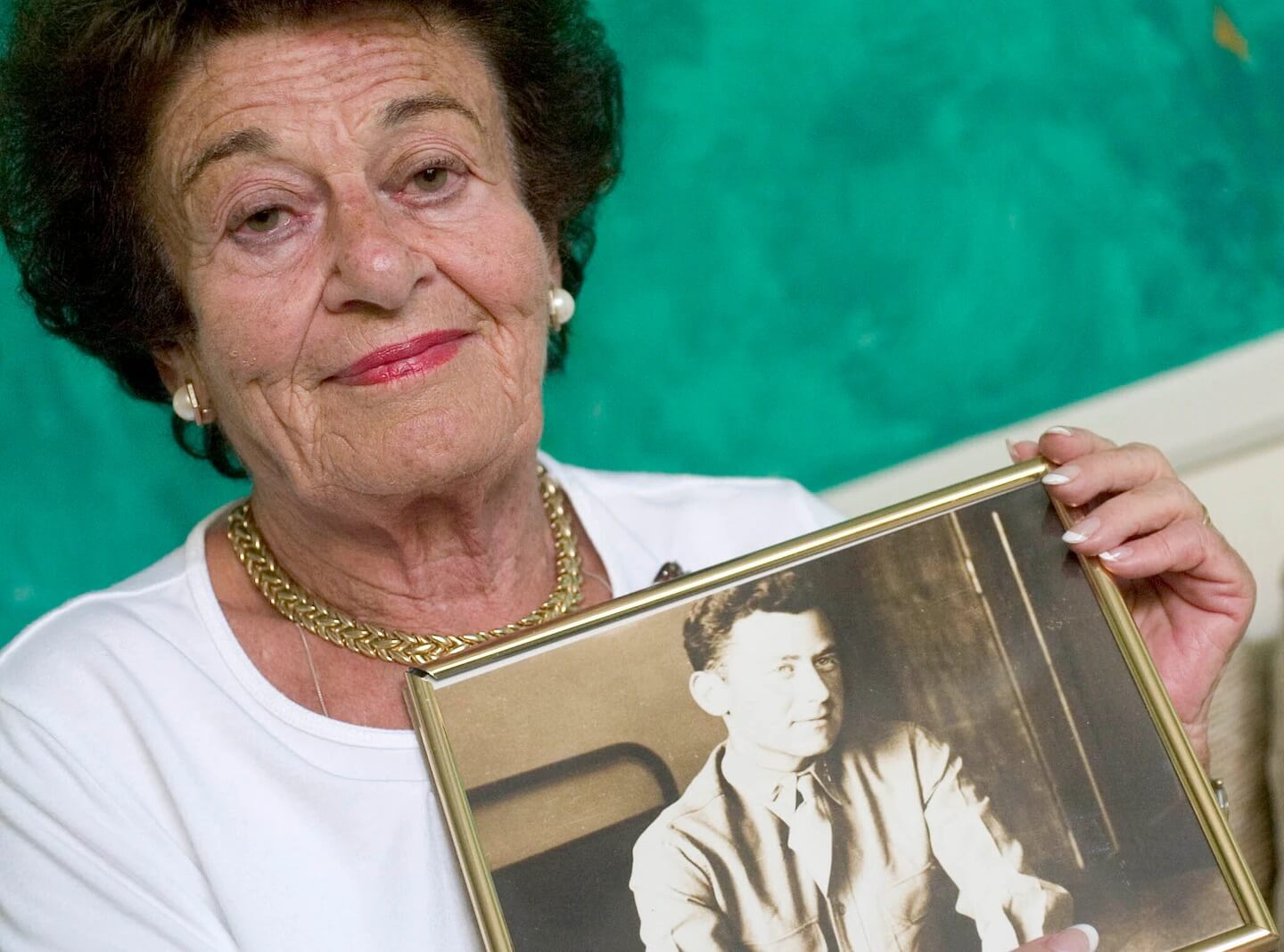
Photographs of her mother, father, and brother were among the few personal items she managed to hide inside the ski boot during her years in the camps.
In 1945, Gerda and more than 2,000 women were forced on a 350-mile death march. Wearing the ski boots her father insisted she take, she endured months of starvation, exhaustion, and freezing temperatures. Only 120 girls survived.
It was under these circumstances, at the end of a Nazi death march, on the eve of her 21st birthday, that Gerda Weissmann met the man she would marry. Gerda weighed 68 pounds. Her hair had turned white. She hadn’t had a bath in three years. But Kurt Klein, an American of German-Jewish roots, could see beneath Gerda’s outward appearance into the nobility of a soul, the dignity of a woman.

On May 7, 1945, the war’s final day in Europe, Gerda was liberated by American soldiers—among them Lt. Kurt Klein, a German-Jewish refugee whose own parents had perished at Auschwitz.
He treated her with gentleness she had not seen in years—addressing her as “a lady,” holding the door for her, and seeing past her emaciated, white-haired appearance to the dignity within her. Gerda later said:
“He opened the door to my future.”
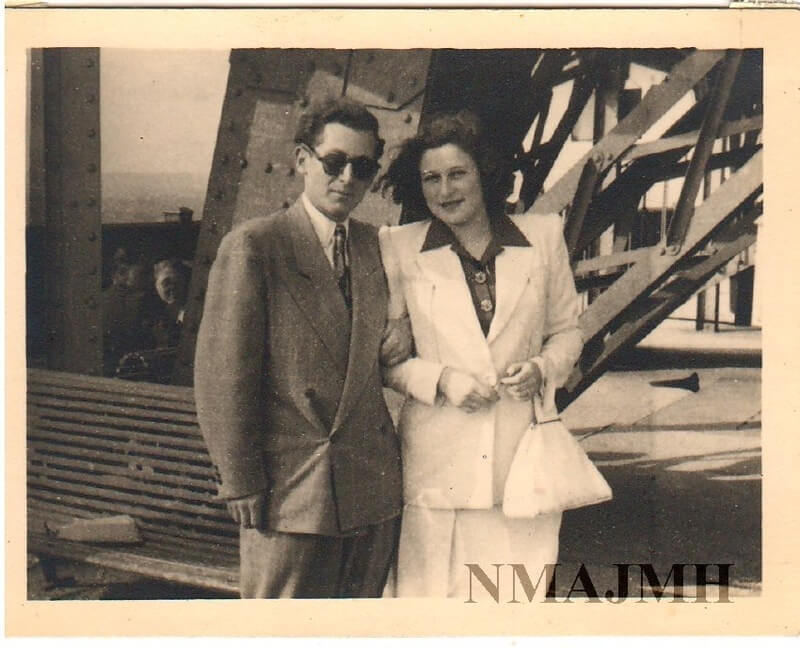
Gerda and Kurt married in 1946 and moved to the United States, eventually raising three children. Their long marriage and family life were acts of reclamation—proof that love and hope could outlive even the darkest of histories.

 Jan 14, 2026
 Stories